When a book becomes something to fear
Think about being young again and walking into your school library, looking for a book you’ve heard about, only to discover that it is no longer on the shelves. Not because it is out of print or unavailable, but because someone decided that its subject matter was too controversial for you to read. Maybe it discusses racism, political resistance, sexuality, mental health, or a part of history that makes certain people uncomfortable. Whatever the reason, a story, and the perspective that comes with it, has been taken out of reach.
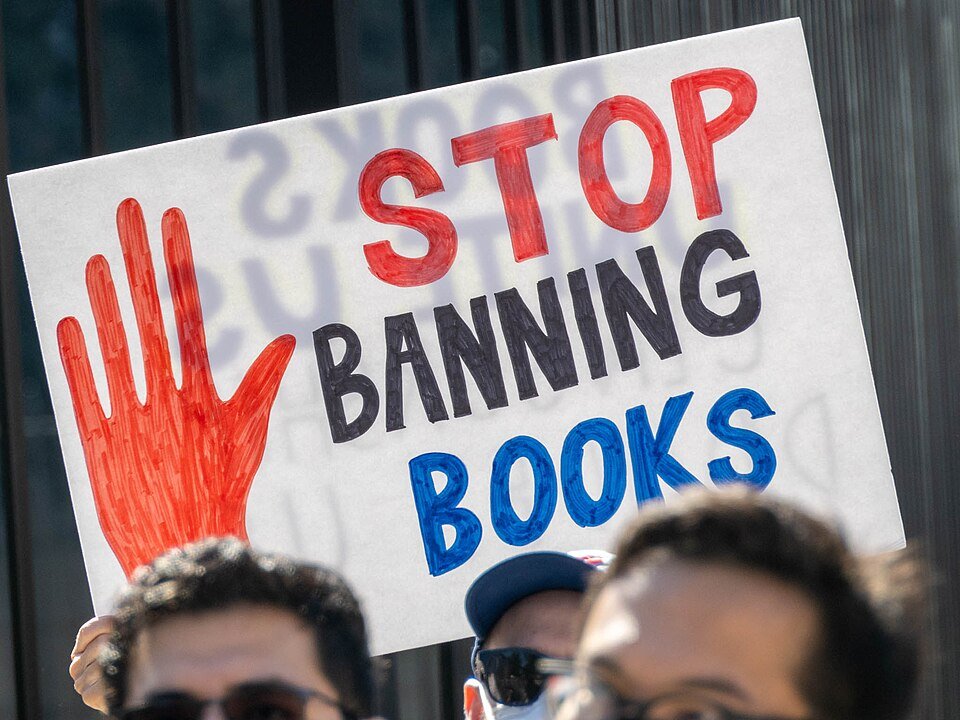
Book censorship in American public education has become an increasingly difficult issue to ignore. Across the country, thousands of books have been challenged or removed from school libraries and classrooms, raising questions about who gets to decide what young people are allowed to read and learn.
According to PEN America’s October 2026 report, there were 11,982 instances of book bans in public schools during the 2025–2026 school year, affecting 7,370 unique titles. This is the highest number of recorded bans in a single school year since the organization began tracking the issue in 2021. Even more concerning, 58% of the titles were intended for young adult readers, and more than 80% of the banned titles were fiction.
These numbers represent more than a disagreement over library selections. They reflect a larger conversation about our educational system, freedom of expression, and the importance of allowing young people to encounter ideas that challenge their understanding of the world.
As someone who has always been interested in expression in the forms of literature, cinema, and writing, I find this particularly troubling. Stories have an incredible ability to introduce us to unfamiliar experiences, make complicated issues more understandable, and encourage conversations that might otherwise never happen. Storytelling in itself is one of the ways we learn to understand people beyond our own experiences.
So why are so many of those stories being taken away?
What does banning a book actually mean?
Before looking at individual titles, it is important to understand what book censorship looks like in practice.
A book challenge generally begins when an individual or group formally requests that a book be removed or restricted because of its content. A challenge does not automatically mean a book has been banned. However, when a school or library responds by removing the book, limiting access to it, or relocating it to a section where students cannot freely browse, censorship has taken place.
This distinction matters because the language surrounding book bans can sometimes make the issue seem less widespread than it is. A book does not necessarily have to disappear from every school in the country to become inaccessible to students. It may be removed from a single district, restricted to certain grade levels, or placed behind an approval requirement.
The current wave of challenges has frequently focused on books that include LGBTQ+ characters, people of color, general discussions of race and racism, sexual violence, and other subjects deemed controversial by challengers.
PEN America’s research has also identified the influence of organized advocacy groups, government officials, and state legislation in driving removals. Its 2025–2026 report found that 72% of the districts it tracked had bans attributable to state legislation in some form.
Texas and Florida accounted for the overwhelming majority of recorded bans that school year. Texas alone recorded more than 8,000, while Florida recorded more than 3,200.
It is worth recognizing that not every book challenge is identical. Parents and educators can reasonably disagree about whether a particular book is suitable for a particular age group. Schools should consistent ways to review those concerns. But there is a meaningful difference between discussing age-appropriate access and removing books because their ideas or subject matter are politically or culturally uncomfortable.
The latter raises a much bigger question: If students are only allowed to encounter ideas that everyone already agrees with, how are they supposed to develop independent opinions or appreciate diverse perspectives as a whole?
The stories being taken off the shelves
Perhaps the most important part of this conversation is looking at the actual books being challenged. Behind every statistic is a story someone believed young readers should not have access to.
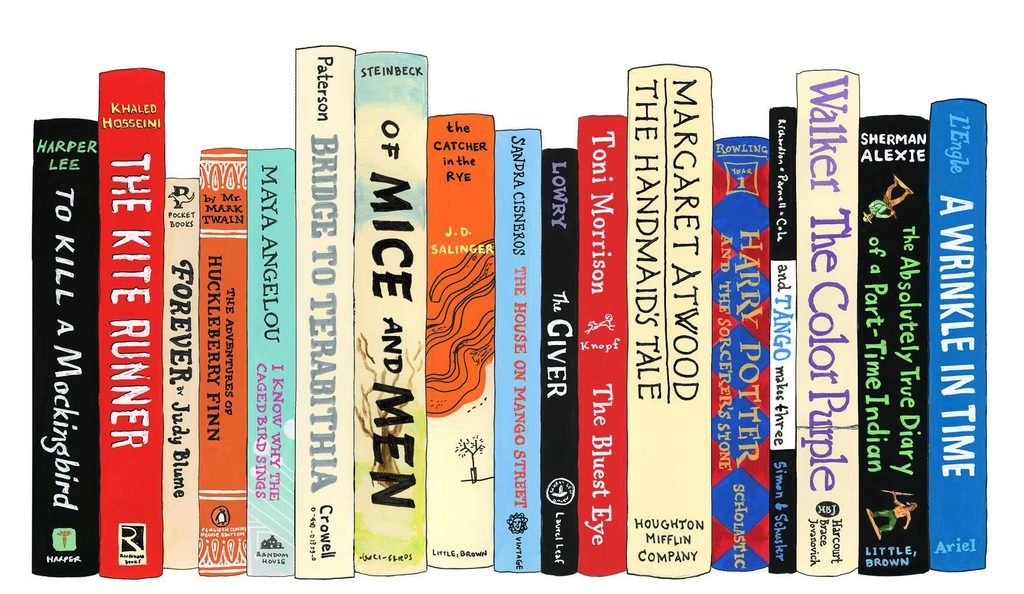
Some of the most frequently banned books are not obscure political manifestos or instructional guides. They are novels, memoirs, and coming-of-age stories that explore experiences many teenagers encounter themselves or may one day need guidance on. Many books that were crucial throughout my own adolescence.
Consider a few examples:
- The Hate U Give by Angie Thomas explores police brutality, systemic racism, identity, and activism through the perspective of a Black teenage girl. Its story encourages readers to consider how race and inequality shape people’s everyday experiences.
- Speak by Laurie Halse Anderson follows a teenage girl dealing with the aftermath of sexual assault. It explores trauma and the difficult process of finding one’s voice.
- The Perks of Being a Wallflower by Stephen Chbosky examines so many themes such as adolescence, friendship, depression, trauma, and the challenges of navigating high school.
- The Handmaid’s Tale by Margaret Atwood imagines an authoritarian society in which women are stripped of their rights and freedoms. Its themes of political extremism, reproductive control, and resistance make it particularly relevant to discussions about abortion and the government.
- Sold by Patricia McCormick tells the story of a young Nepalese girl who is trafficked into sexual exploitation. It confronts human trafficking, poverty, and the exploitation of vulnerable children.
These are not all books with the same audience or reading level, and each deserves to be considered in its full literary and educational context. However, they demonstrate the range of subjects that can become targets of censorship.
In its 2025–2026 report, PEN America identified Sold, Speak, Crank, The Handmaid’s Tale, and Looking for Alaska among the most frequently banned titles. The reasons for challenging books vary, but many of the recurring targets involve difficult experiences, marginalized identities, and subjects that are essential to living in our society.
What stands out to me is that many of these books are not trying to tell readers what to think. They are giving readers something to think about.
A novel about racism does not automatically tell someone what political position to adopt. A story about sexual violence does not encourage that violence. A book about depression does not make someone depressed. Instead, these stories can provide language for difficult experiences, introduce historical and social context, and help readers recognize that they are not alone.
Removing them does not make the issues they discuss disappear.
Censorship versus critical thinking: What should education actually encourage?
There is an important distinction between protecting young readers and protecting them from knowledge.
Parents should absolutely have a voice in their children’s education, and teachers and librarians have a responsibility to consider age, context, and educational value when recommending reading material. But those responsibilities should not become a reason to restrict what every student in an entire school or district can access. Students should have opportunities to examine various subjects, discuss them, and reach their own conclusions.
In fact, this is where education should be doing its most important work.
Rather than removing a book because its subject is difficult, educators can provide historical context, facilitate discussions, and encourage students to evaluate what they are reading. They can help young people distinguish between fact and opinion, recognize unreliable arguments, and understand why different people may interpret the same events differently.
The legal conversation matters here, too. In the 1982 Supreme Court case Board of Education v. Pico, the Court addressed the removal of books from public school libraries. Justice William Brennan’s plurality opinion argued that school boards could not remove library books simply because they disliked the ideas contained in them. The case recognized that students’ First Amendment interests are particularly important in school libraries, although it did not eliminate schools’ ability to make legitimate educational and age-appropriateness decisions.
At the end of the day, a school library should be a place where students can explore ideas, not just a collection of materials that reflect the opinions of whoever happens to be in charge.
Learn more
- PEN America: A Spotlight on School Book Bans (2025–2026) — The latest national findings and statistics on school book bans.
- PEN America: Facts & Fiction — Stories Stripped Away by Book Bans — Research into the subjects and perspectives represented in banned books.
- American Library Association: 2025 Most Challenged Books — A closer look at the books most frequently challenged in libraries.
- Supreme Court case: Board of Education v. Pico (1982) — The legal debate surrounding students’ First Amendment rights and school library book removals.
- PEN America: Banned Books List 2026 — Explore individual titles and learn why they have been challenged or removed.
- National Coalition Against Censorship — Learn about efforts to protect freedom of expression in schools, libraries, and the arts.